
The reality, as admitted by Niantic in recent disclosures, is that we were unpaid labor for one of the most ambitious data-collection projects in human history. And the legal world is only just beginning to wake up to the implications.
The “Game” Was the Trojan Horse
When Pokémon Go launched in 2016, it felt like magic. It placed digital creatures onto our camera feeds, blending the virtual and physical worlds. But while we were focused on catching a Charizard, Niantic was building something far more valuable: a precise, three-dimensional, geolocated map of the planet.
Niantic has now revealed the scale of this operation. Over 143 million active users didn’t just play a game; they walked a route. They scanned their surroundings. They provided images of storefronts, park benches, and private residences from every conceivable angle, light condition, and time of day.
The result is a dataset of staggering proportions: 30 billion images. To put that in perspective, no single entity—not Google, not Apple, not the most ambitious governmental mapping agency—could have deployed a fleet of vehicles to capture the world at this granular, pedestrian level. They would have needed an army. Instead, Niantic found volunteers willing to pay for the privilege of working.
The Cultural Paradox: Connection as a Commodity
This is where the socio-cultural impact becomes deeply ironic. The game’s primary appeal was its promise to reconnect a digitally isolated generation with the physical world and with one another. “Catch ’em all” became a social mantra. It facilitated friendships, launched marriages, and even guided tourists through foreign cities. It was, for a time, a genuine force for public good, encouraging exercise and outdoor exploration.
Yet, that very social fabric was the perfect camouflage for data extraction. The trust forged between players, the sense of shared adventure, masked the fundamentally one-sided transaction occurring between the user and the corporation. We were building community, but we were also, inadvertently, building a commodity.
The cultural narrative of the game—”Gotta Catch ‘Em All”—kept players engaged, ensuring a constant stream of fresh visual data. The social pressure to participate, to join friends on a Community Day, became a driver for a massive, unpaid workforce. The very real-world joy and connection we experienced was the sugar-coating on a very large, very powerful data-collection pill.
From PokéStops to Payloads
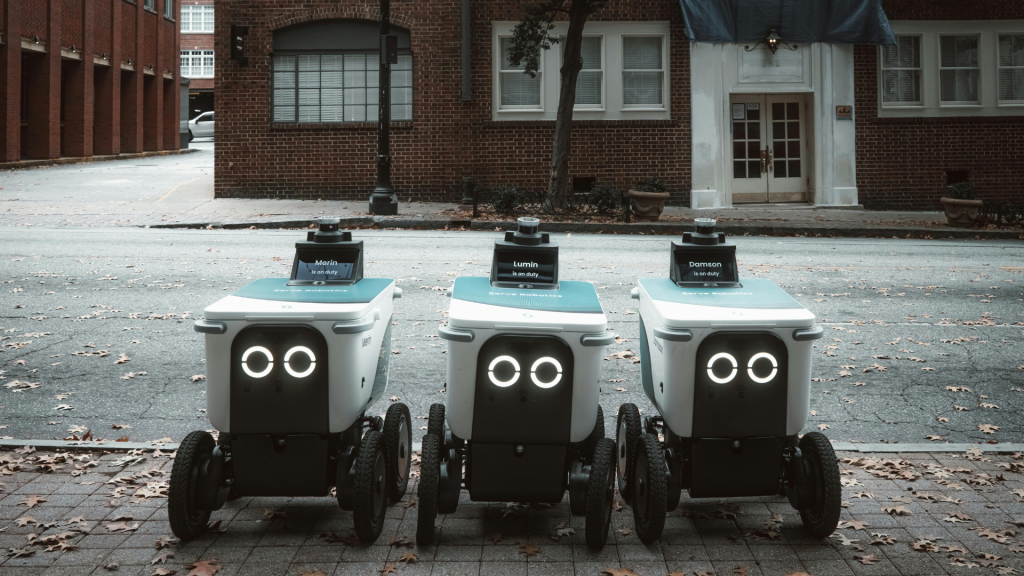
The confession is buried in the language of technological progress. Niantic is now leveraging this “Visual Positioning System” (VPS) to sell navigation solutions to autonomous delivery robots. These robots, unlike GPS-reliant humans, need to navigate the physical world with centimeter-level accuracy. They need to know that a park bench is three feet from a specific tree, or that a particular storefront has a step. Your Sunday strolls provided that data.
From a data protection standpoint, the pivot is alarming. The data was collected under the banner of entertainment. Users consented to camera access to play a game. But did they consent to being “volunteer subcontractors” for global robotics infrastructure?
This raises fundamental questions under the GDPR, CCPA, and similar frameworks globally:
- 1. Purpose Limitation: When you grant a company access to your camera to overlay a Pikachu on a bench, are you implicitly consenting to that footage being used to train autonomous delivery vehicles? The purpose of “game functionality” is vastly different from “AI training dataset for commercial licensing.”
- The Nature of the Data: While Niantic likely argues that the data is aggregated and anonymized, 30 billion images containing identifiable faces, license plates, and private property create a monumental mosaic of surveillance. Anonymization is difficult to guarantee in visual datasets where a person’s face or home is a fixed, identifiable feature.
- Informed Consent: Were users informed that their gameplay was effectively a site-survey mission? The “heist” analogy is legally charged, but it highlights a breach of trust. If users knew they were building a world for robots, would they have been as enthusiastic?
The Regulatory Blind Spot
We often worry about social media platforms scraping our posts or search engines tracking our clicks. But Pokémon Go represented a physical-world data grab. It turned millions of consumers into mobile sensors.
The legal profession and regulators are currently playing catch-up. How do you regulate “incidental” data collection when the hardware (the phone) and the software (the game) are designed to make the incidental the primary asset?
For lawyers advising tech companies, the Niantic case is a cautionary tale about “purpose creep.” It demonstrates that the true value of a consumer app may not be the microtransactions, but the macro view of the world it enables.
For the 143 million players, the realization is sinking in: We weren’t just catching monsters. We were building the cage. We were mapping our neighborhoods so that in the future, robots wouldn’t need us to navigate them at all.
The biggest data heist in history wasn’t a hack. It was a game. And the final level is an AI-powered world that knows our streets better than we do.
